
Creating a home that feels both beautiful and deeply restorative has become a top priority for modern homeowners. If you’re searching for ways to transform your space into something more calming, functional, and inspiring, this article is designed to guide you. We’ll explore practical interior strategies, space optimization techniques, and creative concepts that elevate everyday living while reflecting your personal style.
One of the most impactful movements shaping homes today is biophilic interior design — an approach that reconnects indoor spaces with nature to improve well-being and visual harmony. But knowing how to apply it effectively, without overwhelming your layout or budget, can be challenging.
This guide breaks down actionable design principles, adaptable decor aesthetics, and smart layout ideas that work in real homes. Our insights are grounded in proven interior design strategies and current home styling trends, ensuring you receive practical, experience-backed advice you can confidently implement.
The Science of Serenity: Understanding Biophilic Design
At its core, biophilia is the idea that humans have an innate tendency to seek connections with nature and other living systems. Coined by biologist E.O. Wilson (1984), the term suggests we’re wired to feel better around greenery, water, sunlight, and natural materials. Think about how your shoulders drop when you hear ocean waves (even if it’s just a sound machine). That’s biophilia in action.
Beyond Aesthetics
This isn’t just about pretty spaces. Studies show exposure to natural elements can lower cortisol levels, the hormone linked to stress (Ulrich, 1984). Meanwhile, research from the University of Exeter found workplaces enriched with plants boosted productivity by 15%. In other words, adding a fiddle-leaf fig isn’t indulgent—it’s strategic.
To apply this at home, start small. Place one live plant in your most-used room. Position seating near natural light. Swap synthetic fabrics for linen or cotton. These are simple, science-backed upgrades.
Direct vs. Indirect Experience
A direct experience means literal contact with nature: plants, water features, fresh air. An indirect experience uses representations—wood-grain finishes, botanical prints, earthy color palettes. Both support well-being, and layering them creates depth.
This is where biophilic interior design moves from theory to practice. Start with one natural focal point, then echo it subtly through texture or pattern. Pro tip: if you can’t keep plants alive, high-quality preserved moss walls offer impact without upkeep.
The Foundation: Earthy Materials and Natural Textures
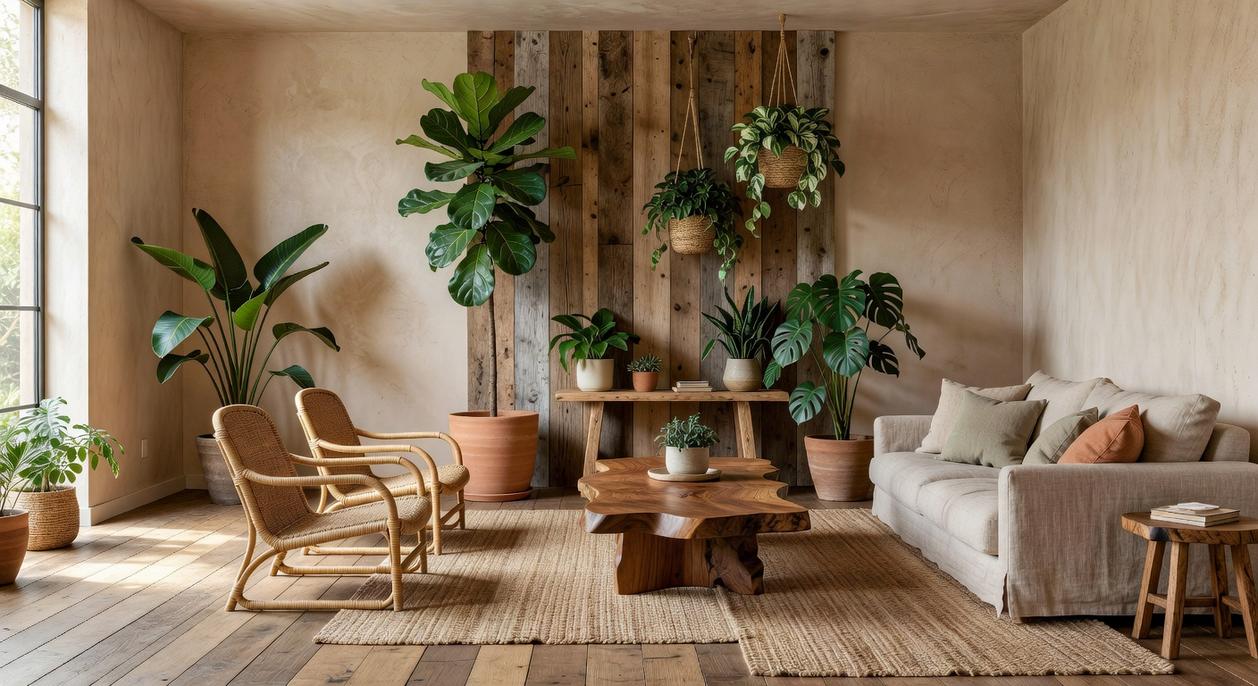
When designers talk about “earthy materials,” they simply mean materials that come directly from nature or closely resemble it. Think hardwood floors instead of vinyl, or stone tiles instead of synthetic laminates. The difference isn’t just visual—it’s tactile (you feel it under your feet).
Flooring and Walls
Hardwood, bamboo, and cork are popular because they’re durable and renewable. Bamboo, for example, grows much faster than traditional timber, making it a more sustainable option (U.S. Department of Agriculture). Cork is harvested from tree bark without cutting the tree down—an easy win for eco-conscious homes. Stone flooring adds weight and permanence, while natural fiber rugs like jute or sisal soften the look without hiding the texture beneath.
This approach connects directly to biophilic interior design, a concept that emphasizes bringing natural elements indoors to improve well-being (Human Spaces Report, 2015).
Furniture with Character
Solid wood—oak, walnut, maple—offers visible grain patterns. Grain refers to the natural lines formed as a tree grows. Instead of hiding knots and imperfections, celebrate them (they’re proof the material had a past life). Rattan and wicker add lightness and airflow, preventing rooms from feeling heavy.
Textural Layers
Texture means how something feels or appears to feel. Layer linen curtains, chunky wool throws, cotton cushions, and leather accents to create depth. Mixing soft and structured fabrics keeps the space dynamic.
Creative insight: Use reclaimed wood for a feature wall or install live-edge shelving—where the wood’s natural edge remains untouched—for a rustic, one-of-a-kind statement.
The Lifeblood: Maximizing Light, Air, and Greenery
Natural elements aren’t decorative extras—they’re functional upgrades for your well-being. In fact, studies show that increased daylight exposure improves mood and productivity (Harvard Health). So first, let’s talk about light.
Harnessing Natural Light
Start by swapping heavy drapes for sheer window treatments that diffuse sunlight without blocking it. Next, position mirrors opposite windows to reflect daylight deeper into the room (yes, it’s an old trick, but it works). Finally, choose light-reflective paint colors—soft whites, warm beiges, or pale sage—to amplify brightness. If your space still feels dim, trim outdoor obstructions where possible. Small tweaks compound quickly.
The Power of Plants
Adding greenery is foundational to biophilic interior design. However, not all plants thrive everywhere.
- Low light: Snake plant, ZZ plant (great for beginners).
- Medium light: Pothos, peace lily (noted by NASA for air-purifying qualities).
- High light: Fiddle leaf fig, succulents.
Function matters, too. Choose trailing plants for shelves, sculptural plants for corners, and air-purifying varieties for bedrooms. Better yet, create plant vignettes—group plants at varying heights using stools or stands for a layered, natural look (think cozy jungle, not chaotic greenhouse).
Water Elements
Even a small tabletop fountain can introduce calming sound. Alternatively, a simple vase with fresh-cut stems brings movement and subtle fragrance. Water signals life—your senses notice.
Space Optimization
Short on square footage? Go vertical. Install hanging planters, floating shelves, or even compact living walls. For more creative ways to personalize your living space, explore creative ways to personalize your living space. When floor space is limited, walls become opportunity.
Finishing a space means engaging every sense. Start with natural scents: diffuse pine, sandalwood, or lavender instead of synthetic sprays; studies show lavender can reduce anxiety and improve sleep quality (National Institutes of Health). As a result, your home feels calmer, not chemically masked.
Next, shape auditory ambiance. Nature soundscapes or a soft water feature gently cover traffic noise, helping lower stress and boost focus (American Psychological Association).
Finally, add visual cues—nature photography, river stones, seashells, pinecones—to reinforce biophilic interior design. Together, these touches elevate mood, sharpen concentration, and make rooms feel restorative. Your senses work together for comfort daily.
Bring Nature Home With Confidence
You came here looking for practical ways to transform your space with biophilic interior design, and now you have a clear path forward. From natural textures and organic materials to strategic lighting and greenery placement, you understand how to create a home that feels calmer, brighter, and more connected to nature.
If you’ve been struggling with rooms that feel sterile, cramped, or uninspiring, you’re not alone. Modern interiors often disconnect us from the outdoors—leaving spaces that look good but don’t feel good. By thoughtfully applying these biophilic principles, you can turn any room into a restorative retreat that supports both beauty and well-being.
Now it’s time to take action. Start by choosing one room and incorporating layered natural elements—plants, wood accents, soft earth tones, and optimized layouts. Small, intentional updates create powerful results.
Ready to completely refresh your home? Get expert-backed design ideas and space-optimizing strategies trusted by thousands of decor enthusiasts. Explore more inspiration and start redesigning your space today—your home should feel as good as it looks.