
If you’re searching for practical ways to make small rooms look bigger exactly as it is given, you’re likely tired of cramped layouts, dark corners, and decor that feels more cluttered than cohesive. Small spaces can feel limiting—but with the right design strategies, they can appear open, airy, and intentionally styled.
This article breaks down proven interior design techniques that transform tight areas into visually expansive spaces. From strategic lighting and color choices to smart furniture placement and space-enhancing decor concepts, you’ll discover actionable tips that create the illusion of depth and flow without costly renovations.
Our guidance is grounded in established interior design principles, spatial planning strategies, and practical home styling methods used by professionals to maximize every square foot. Whether you’re updating a studio apartment, a compact bedroom, or a narrow living area, you’ll find clear, effective insights to help you rethink your layout and unlock your room’s full potential.
Transform Your Compact Room From Crowded to Calm
Let’s be honest: living in a small space can feel suffocating. When every surface is cluttered, your mood shrinks with the room. However, I firmly believe the real culprit isn’t square footage—it’s perception. A cramped layout tricks your brain into seeing chaos (and yes, that affects productivity).
That said, you can make small rooms look bigger with a few intentional shifts. In my experience, these changes matter most:
- Light, cohesive color palettes
- Multi-functional furniture
- Strategic mirror placement
- Vertical storage solutions
Ultimately, smart design—not more space—creates calm, airy functionality.
The Power of Illusion: Using Light and Color to Expand Your Walls
Design isn’t magic—but it can feel like it. With the right LIGHT, COLOR, and placement choices, you can make small rooms look bigger without moving a single wall.
Paint with Light
Light, neutral shades—soft whites, cool grays, pale blues—reflect more light. When a color “recedes,” it visually pushes walls outward, creating an airy effect. Dark tones absorb light, which can feel cozy but also visually shrink a room (think dramatic movie-set apartment energy). If your goal is openness, stick with HIGH-LRV paints (Light Reflectance Value above 60 is a safe bet).
Pro tip: Use the same paint color on walls and trim to blur visual boundaries.
Strategic Mirror Placement
The rule of thumb: place mirrors directly opposite or adjacent to windows. This doubles the perceived light source and adds instant DEPTH. A 36–48 inch vertical mirror works well in living rooms, while oversized floor mirrors amplify brightness in bedrooms.
Let the Light In
Swap heavy drapes for sheer, lightweight curtains. Mount rods 6–12 inches above the window frame and extend them 8–12 inches beyond each side. This trick makes windows appear larger and ceilings taller (yes, it’s a bit of visual sleight of hand).
Layer Your Lighting
Relying on one overhead fixture creates harsh shadows. Combine:
| Lighting Type | Example Fixture | Benefit |
|---|---|---|
| Ambient | Ceiling light |
Overall brightness |
| Task | Table lamp | Focused clarity |
| Accent | Wall sconce | Depth + dimension |
Layered lighting eliminates dark corners and enhances dimension. For more interior design strategies, explore thoughtful layouts that balance function with flow.
Furnish Smarter: Choosing Pieces That Create Openness
Think of your room like a stage. Every piece of furniture is either a spotlight that creates breathing room—or a heavy curtain that closes the scene.
• Go Leggy: Furniture with exposed legs works like a bridge lifted off the ground. When you can see the floor beneath sofas, consoles, or side tables, your eye travels uninterrupted. That unbroken sightline is a simple psychological trick designers use to make small rooms look bigger. It’s the difference between hiking an open trail and walking into a wall. (If the floor disappears, so does the sense of space.)
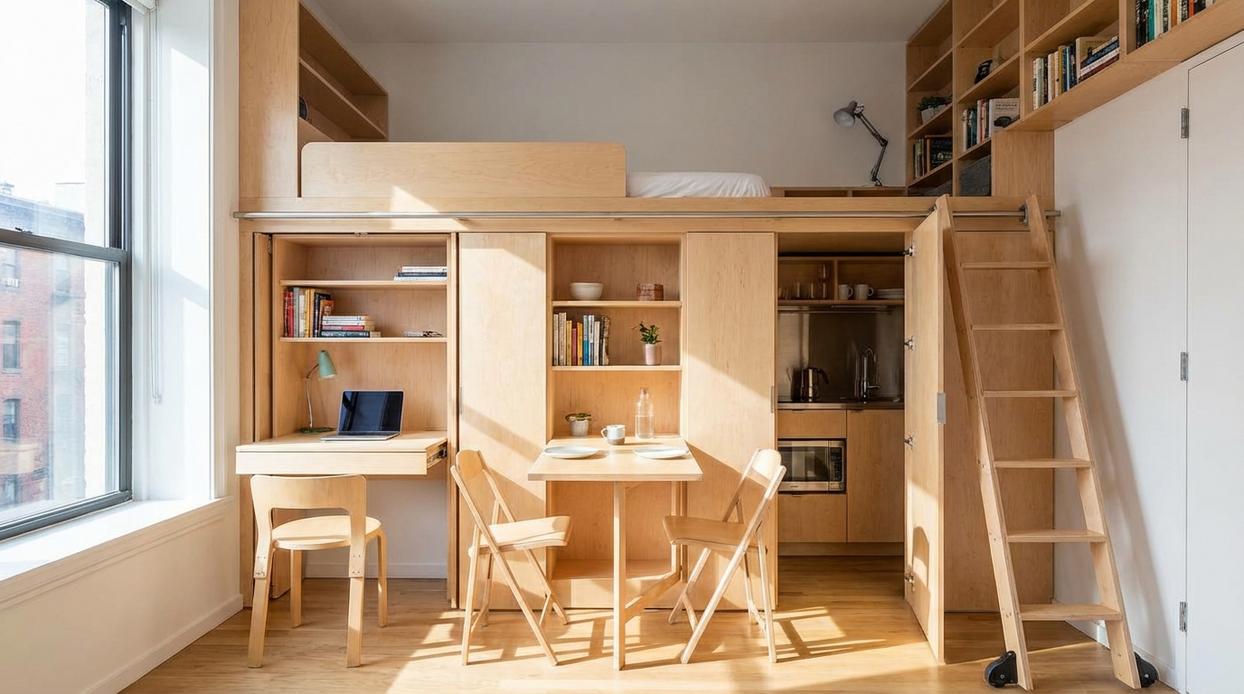
• Embrace Multi-Functionality: In compact homes, furniture should behave like a Swiss Army knife. A storage ottoman that moonlights as a coffee table. A daybed with drawers tucked underneath. An expandable dining table that flexes for guests. Each dual-purpose piece reduces clutter—because one hardworking item replaces two. Pro tip: prioritize hidden storage to keep surfaces visually calm.
• Scale Is Everything: Oversized furniture in a small room is like wearing a winter coat in July—technically possible, wildly uncomfortable. Choose lower-profile silhouettes and slimmer arms. Proportion keeps harmony intact.
• Reduce Visual Weight: Glass, acrylic, and thin metal frames are the ballet dancers of furniture—present, but airy. These visually lightweight materials reflect light and occupy less “mental space,” helping the room feel open rather than packed.
Some argue substantial pieces make a room feel luxurious. Sometimes they do. But in tighter quarters, restraint is the real luxury—space to breathe, move, and live.
Mastering the Layout: How Arrangement Dictates Flow
The first time I rearranged my tiny living room, I did what everyone suggests: shoved the sofa against the wall. It felt logical—more floor space, right? Oddly, the room felt tighter. So I tried something counterintuitive. I pulled the furniture a few inches away from the walls. That small gap created breathing room and instantly made the space feel lighter. Floating furniture (placing it away from walls) can actually make small rooms look bigger because it creates depth.
Next, I defined zones with rugs. An area rug (a textile that anchors furniture visually) under my coffee table suddenly told the eye, “This is the living area.” No drywall required. In open-concept apartments, rugs act like invisible walls—subtle but powerful.
Then I started thinking vertically. Tall bookcases and floor-to-ceiling curtains draw the gaze upward, emphasizing height. It’s a bit like movie set design—your eye follows the drama.
Finally, I cleared pathways. A direct line from the door to the window improves flow and function. When walkways stay unobstructed, a room feels intuitive (and you stop bumping into things).
For more small apartment storage ideas that actually work, explore layout tweaks that complement these strategies.
The Art of Organization: Declutter for Maximum Impact
Cluttered room vs. curated room. Which feels bigger? The answer is obvious the moment you walk in. A clean, edited space always wins. When you remove what you don’t use, you instantly create breathing room (and yes, you’ll actually find your keys).
Compare your options:
- Open piles vs. concealed storage: Under-bed bins and wall-mounted shelves hide visual noise, while exposed stacks shrink a room.
- Crowded surfaces vs. clear lines: Bare countertops and tidy desks create calm flow and make small rooms look bigger.
Some argue more storage means more stuff. True—unless you declutter first. Pro tip: edit before you organize.
Your Spacious Sanctuary Realized
You’ve seen the truth: spacious living isn’t about square footage—it’s about smart decisions. A cramped room feels restrictive (like living in a storage unit), but that discomfort isn’t permanent. With the right moves, you can make small rooms look bigger and breathe easier at home.
Focus on what works:
- Lighten your color palette to reflect more natural light.
- Choose properly scaled furniture that fits—never overwhelms.
- Clear visual clutter and organize intentionally.
These strategies aren’t cosmetic; they fundamentally shift how a room feels.
Start today. Add one mirror or declutter a single surface. Experience the difference immediately.
Bring Your Space to Life with Smarter Design Choices
You came here looking for practical ways to transform your space and make small rooms look bigger without costly renovations. Now you have the strategies to rethink layout, lighting, color, and decor in a way that truly works.
Small rooms can feel cramped, cluttered, and limiting. That frustration is real. But with the right design approach, even the tightest space can feel open, balanced, and beautifully functional.
The next step is simple: start applying these techniques room by room. Rearrange with intention. Choose light-enhancing colors. Maximize vertical space. If you want expert-backed ideas and proven home concepts trusted by design-savvy homeowners, explore more of our space optimization strategies today.
Don’t settle for a home that feels smaller than it should. Take action now and transform your space into one that feels open, stylish, and thoughtfully designed.
 Danielle Ariasimba specializes in the art of space optimization and the practical execution of TH decor aesthetics. With a talent for identifying the hidden potential in any floor plan, she provides the creative insights necessary to transform standard layouts into highly efficient and visually engaging environments. Her contributions ensure that every project maintains a balance between modern sophistication and the essential comforts of home.