
Struggling to make a small room feel bigger, brighter, and more functional? You’re not alone. Many homeowners and renters face the challenge of limited square footage, awkward layouts, and cluttered spaces that never quite feel right. The good news: smart design can completely transform how your home looks and works—without adding a single extra square foot.
This article is designed to help you maximize vertical space and unlock the hidden potential in every room. From strategic shelving and wall-mounted storage to layered lighting and tall décor elements, you’ll discover practical, stylish solutions that instantly create the illusion of height and openness.
We draw on proven interior design principles, space-planning strategies, and real-world home styling techniques to ensure every tip is both functional and visually cohesive. Whether you’re redesigning a compact apartment or optimizing a family home, you’ll find clear, actionable ideas to elevate your space—literally and visually.
Ever notice how your home feels smaller by the year? Shoes multiply, shelves overflow, and somehow the ceiling just hovers there, unused. For decades—especially during the open-concept boom of the 2010s—design conversations obsessed over square footage, rarely the cubic footage above our heads.
Most layouts stretch outward, not upward. As a result, valuable wall height sits empty while floors grow crowded.
This guide shows you how to think vertically and maximize vertical space with tall shelving, stacked storage, and ceiling-drawn sightlines. In other words, you’ll utilize vertical space effectively to optimize layout and design—practically, beautifully, and immediately. Starting today. Confidently.
The Psychology of Height: Drawing the Eye Upward
Vertical lines—design elements that extend from floor to ceiling—naturally pull our gaze upward. Because of this, rooms feel taller, airier, and more refined (yes, even if your ceiling is stubbornly average). It’s the same visual trick filmmakers use in epic scenes—think towering shots in The Lord of the Rings—to create awe through height.
In small apartments especially, vertical paneling, tall bookcases, or elongated drapes create a visual illusion. The eye travels up uninterrupted, making the ceiling seem higher than it is. In other words, you maximize vertical space without knocking down a single wall. That’s not magic; it’s perception at work.
At the same time, height balances a room. Low-profile sofas and coffee tables ground a space, but without taller counterparts, everything can feel squat. Adding a floor-to-ceiling mirror or vertical art anchors the design and restores proportion.
Pro tip: hang curtains closer to the ceiling than the window frame for instant elevation.
Wall-Mounted Wonders: Getting Everything Off the Floor
When square footage is tight, the floor is prime real estate. The fastest way to reclaim it? Go vertical. The goal is simple: maximize vertical space while keeping the room visually balanced (not like a game of décor Jenga).
Floating Shelves vs. Traditional Side Tables
Floating shelves are the minimalist’s dream. Mounted above a bed, they double as a nightstand. In a living room, they hold books, plants, or framed art without adding bulk. Stagger them at varying heights to create visual rhythm—think gallery wall, but functional.
Compare that to traditional side tables: useful, yes—but they eat up floor space and can make small rooms feel crowded. If you’re styling a compact bedroom, shelves win for flexibility and airflow. If you need concealed storage, though, a table with drawers may edge ahead.
Pro tip: Install shelves at eye level for décor and slightly lower for everyday grab-and-go items.
Tall Bookcases vs. Low Cabinets
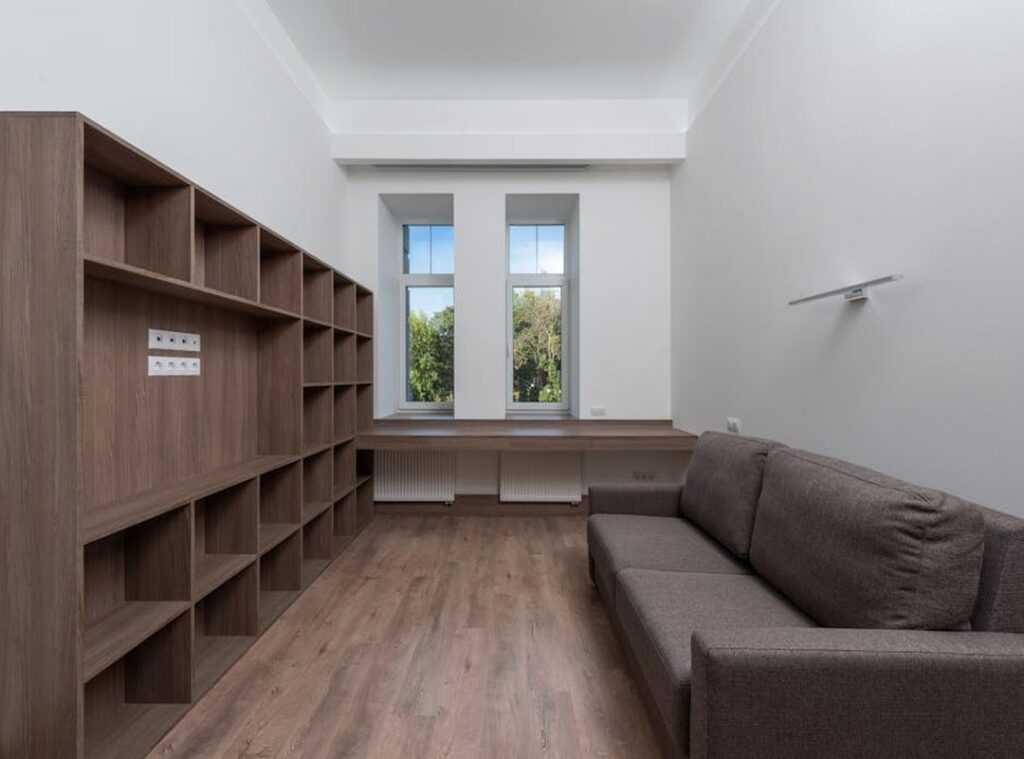
A tall, narrow bookcase or wall-mounted étagère offers serious storage with a tiny footprint. It draws the eye upward, adding architectural drama (very “city apartment in a rom-com”).
Low cabinets, by contrast, ground a space but visually shorten walls. Choose tall units when you want height and openness; choose low pieces when you prefer a horizontal, cozy vibe.
Modular Wall Grids & Pegboards vs. Fixed Storage
Wall grids and pegboards are hyper-functional. In kitchens, they corral utensils. In entryways, they manage keys and bags. In home offices, they evolve with your workflow.
Fixed shelving looks polished but lacks adaptability. Grids let you rearrange hooks and baskets as needs change—ideal for growing families or shifting hobbies.
Off the floor. On the wall. Space reclaimed.
The Art of Tall Furnishings and Decor

I used to live in a rental with ceilings so low I could practically high-five the smoke detector. It felt cramped—until I learned one simple trick.
The Curtain Trick
Here’s the secret designers swear by: hang curtain rods as close to the ceiling as possible, not just above the window frame. Pair them with curtains that skim the floor (never awkwardly hover). This creates a strong vertical line—a design term for elements that draw the eye upward—and instantly makes walls appear taller. According to design guidance from Architectural Digest, higher-mounted drapery can visually elongate a room (Architectural Digest, 2022). It’s theatrical in the best way (think stage curtains rising before a big reveal).
Lean and Lofty
Next, I added a leaning ladder for throws and a tall, slender floor lamp. Because they’re narrow, they add function without bulk. Designers call this “visual weight”—how heavy an object looks in a space. These pieces maximize vertical space while keeping the footprint light. Pro tip: choose open-frame designs so light passes through.
Mirror Magic
Finally, I leaned a floor-length mirror against the wall. Mirrors reflect light, which makes rooms feel larger (National Association of Realtors notes light is key to perceived space). It also doubles as one of my favorite hidden storage solutions for a clutter free home.
Sometimes, height is just an illusion—but it’s a powerful one.
Creative Heights: Using Art, Light, and Greenery
Most people decorate at eye level. Big mistake. When everything sits between your sofa and your ceiling fan, a room feels visually cramped—even if it’s spacious. The smarter move? Design upward.
The Vertical Gallery Wall
Forget sprawling, horizontal gallery walls. A tightly grouped column of frames pulls the eye straight up, creating the illusion of taller ceilings. Think of it like a visual runway guiding attention skyward (yes, your walls deserve drama). Keep spacing consistent and align frames along a central axis for cohesion.
- Choose art with a shared color story
- Stack from about 6 inches above furniture to near ceiling height
Some argue this feels too rigid. I disagree. Structure is what makes it striking.
Pendant Power
Oversized chandeliers aren’t just for ballrooms. A pendant with a long chain fills neglected airspace, especially over dining tables or in stairwells. Critics say they overwhelm small rooms. Actually, when scaled correctly, they anchor the room and maximize vertical space without cluttering surfaces.
Hanging Gardens
Floor plants are lovely—but predictable. Suspend trailing pothos or install wall-mounted planters higher up. You free tables below while adding movement and color above. (Plus, greenery softens harsh architectural lines.)
Design doesn’t stop at eye level. It rises.
A New Perspective on Your Living Space
For years, we’ve ignored one major pain point: wasted vertical real estate. We obsess over floor plans, yet blank walls sit untouched.
Consider this shift: horizontal thinking vs. vertical thinking. Low curtains that chop a room short compared with high-hung panels that draw the eye upward. Bulky floor bookcases versus floating shelves that free pathways. Short cabinets against tall furniture that elongate sightlines. Sparse eye-level frames compared with stacked vertical art arrangements.
In other words, maximize vertical space and the entire layout shifts. This week, choose one room and test one vertical upgrade.
Create a Home That Finally Works for You
You came here looking for smarter ways to use your space—and now you have practical strategies to make every square foot count. From layout adjustments to storage solutions and styling techniques, you’re equipped to transform cluttered, cramped areas into rooms that feel open, intentional, and beautifully designed.
The frustration of limited space doesn’t have to define your home. With the right approach, you can maximize vertical space, improve flow, and create a home that feels larger without adding a single square foot. Small changes, when done strategically, deliver powerful results.
Now it’s time to take action. Start by identifying one room that feels the most restrictive and apply these concepts immediately. If you want expert-backed ideas tailored to your layout, explore our proven design strategies trusted by homeowners who want smarter, more functional interiors. Don’t let unused space go to waste—start redesigning today and turn your home into a place that truly works for you.
 Kelrisa Talvess founded Tht Homedec with a mission to bridge the gap between high-level interior design strategies and practical, everyday living. By blending sophisticated TH decor aesthetics with innovative space optimization tips, she has created a platform that empowers individuals to master their own home concepts. Kelrisa’s approach centers on the belief that creative insights should be both inspiring and functional, ensuring that every curated environment is as efficient as it is beautiful.