
Creating a home that feels cohesive, stylish, and uniquely yours can be challenging—especially when you’re drawn to different aesthetics and unsure how to bring them together. If you’re searching for practical ways to elevate your space, refine your layout, or master mixing design styles, this article is designed to guide you step by step. We focus on actionable interior design strategies, smart space optimization techniques, and creative decor insights that help you achieve balance without sacrificing personality. Our recommendations are grounded in proven design principles, real-world applications, and carefully researched home concepts that prioritize both beauty and functionality. Whether you’re refreshing a single room or reimagining your entire home, you’ll find clear guidance on combining textures, colors, and layouts with confidence—so your space not only looks curated, but truly feels like home.
Start With a Strong Foundation
Eclectic rooms feel effortless, but they follow structure. Begin with a unifying element—color, texture, or scale. Think of it as your playlist’s vibe. If most pieces share warm wood tones, even a modern lamp and vintage rug can coexist.
Next, balance old and new in a 70/30 split. For example, pair a sleek sofa with a carved antique table (contrast creates energy). When mixing design styles, repeat one material at least three times to create rhythm.
Finally, edit ruthlessly. Remove one item from every crowded surface. Cohesion often comes from what you leave out.
The Foundation: Establishing Your Dominant Design Language
For expert tips on mastering this art of blending traditional and contemporary elements in your home, be sure to check out our comprehensive guide in the ‘Wutawhacks How Tos‘ section.
Before you experiment, you need a clear base. A dominant design language is the primary style that guides your space’s overall look and feel—think Mid-Century Modern’s tapered legs and walnut finishes, Scandinavian’s light woods and airy palettes, or Industrial’s exposed metal and raw textures. In other words, it’s your visual anchor.
The 80/20 Rule
First, commit to the 80/20 rule: 80% of the room should reflect your primary style, while 20% allows flexibility. This balance keeps mixing design styles intentional rather than chaotic (because “eclectic” shouldn’t mean “confused”). The benefit? Cohesion. Your room feels curated, not accidental.
Identifying Your Anchor Pieces
Next, choose anchor pieces—the large, foundational items that set the tone. A low-profile walnut sofa signals Mid-Century Modern. A linen-upholstered bed frame suggests Scandinavian calm. A reclaimed wood dining table with steel legs leans Industrial. Since these pieces occupy the most visual weight, they naturally define the aesthetic direction.
Practical Checklist
To clarify your dominant style, outline:
- Materials: wood type, metal finishes, fabrics
- Color palette: neutral, earthy, monochrome, bold accents
- Silhouettes: clean lines, curved forms, structured frames
Pro tip: If a new item doesn’t match two of these three categories, reconsider it. Consistency builds impact.
The Artful Accent: Introducing Contrast and Personality
This is where the blending begins. Once your foundational 80% feels cohesive, the remaining 20% becomes your creative playground. Think of it as the plot twist in a good novel—it adds intrigue without rewriting the whole story.
Pairing Opposites
One of the most effective ways to add character is by mixing design styles. For example, a rustic farmhouse table—defined by its natural wood grain and sturdy, timeworn construction—can feel unexpectedly fresh when paired with sleek, modern chairs featuring clean lines and powder-coated steel frames. The contrast works because each piece highlights the other’s strengths: warmth meets refinement. In practice, designers often balance proportions (similar seat heights, complementary color tones) to keep the pairing intentional rather than chaotic. Pro tip: repeat one shared element, like wood tone or black metal, to visually “anchor” the mix.
Across the Eras
Meanwhile, incorporating vintage or antique pieces into a contemporary setting adds authenticity. A mid-century credenza (typically low-profile with tapered legs) can ground a minimalist living room without turning it into a time capsule. The key is context—surround ornate or aged items with simpler silhouettes so they feel curated, not cluttered. (No one wants their living room mistaken for a period drama set.)
Texture and Material Play
Finally, contrast isn’t just visual—it’s tactile. Pair smooth metal with rough-hewn wood, or plush velvet upholstery with raw linen drapes. These material juxtapositions create depth, which designers define as layered visual interest that keeps the eye moving. As a result, the room feels sophisticated and dynamic rather than flat. Done thoughtfully, contrast transforms a space from predictable to personal.
Creating Cohesion: The Elements That Tie Everything Together
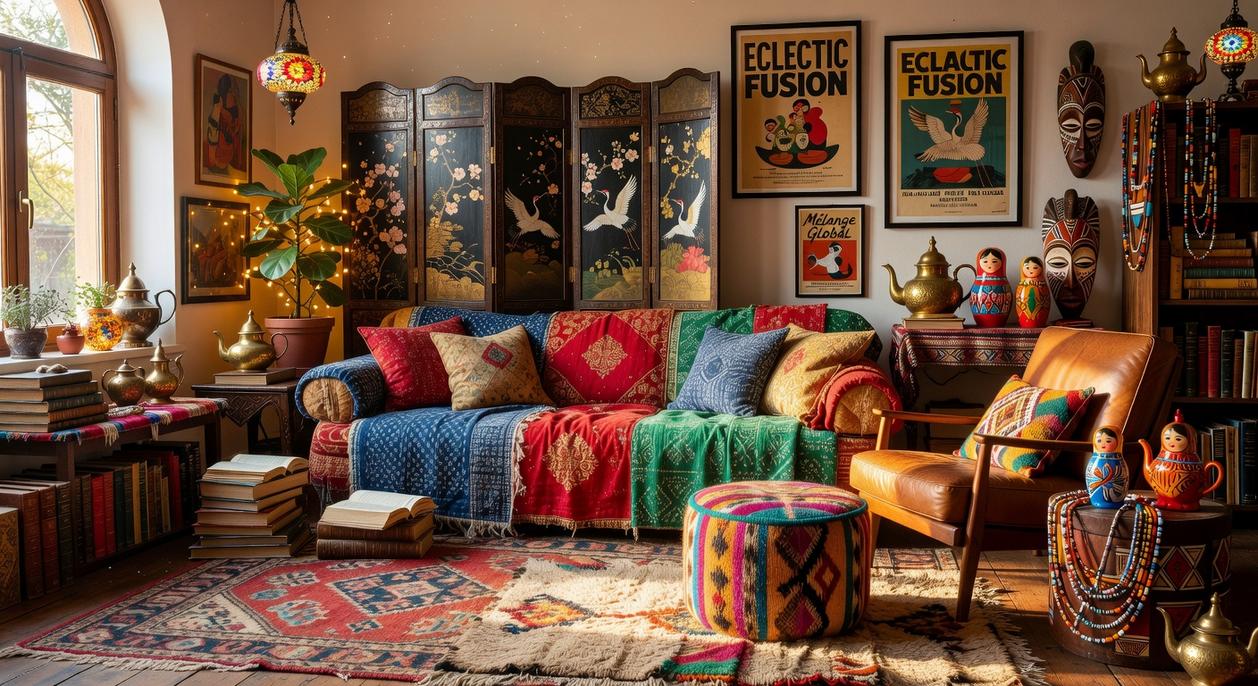
I learned the hard way that cohesion doesn’t happen by accident. Early on, I fell in love with mixing design styles and assumed good taste alone would carry the room. It didn’t. The result? A space that felt CONFUSED, not curated. The lesson: unity is intentional.
The Unifying Color Palette
A unifying color palette means limiting your space to three to five consistent hues. These colors repeat across furniture, textiles, and decor to create a visual thread. Think navy pillows echoing navy art accents or warm oak tones mirrored in picture frames. According to color theory principles from the Interaction Design Foundation, repetition of color strengthens visual harmony and reduces cognitive overload (2020).
If you ignore this step, rooms quickly feel chaotic (I’ve been there). A simple way to stay grounded is following the 60 30 10 rule explained a timeless interior design formula to balance dominant, secondary, and accent colors.
Repetition of Shape
Repeating a shape—curves, straight lines, or geometric patterns—creates subtle rhythm. For example:
- Rounded mirrors
- Curved armchairs
- Circular coffee tables
Even if styles differ, shared shapes whisper CONNECTION.
The Role of “Bridge” Pieces
Bridge pieces are transitional elements that connect aesthetics. A modern neutral rug under ornate furniture, or matte black hardware tying vintage and industrial pieces together, can prevent visual tension.
Pro tip: When in doubt, simplify one layer before adding another.
Cohesion isn’t about perfection. It’s about intentional repetition. Miss that, and the room feels RANDOM. Get it right, and everything clicks.
Common Pitfalls and How to Avoid Them
Mistake #1: Lack of a Focal Point. Every room needs a visual anchor—the first place your eye lands. Without it, the space feels like a group chat where everyone’s talking at once. Create hierarchy by choosing one “hero” piece (a bold sofa, statement art) and letting supporting items play backup.
Mistake #2: Ignoring Scale and Proportion. Scale refers to size; proportion is how objects relate visually. Pairing a delicate side table with an oversized sectional? Awkward. Balance visual weight so pieces feel intentional.
Mistake #3: Forgetting Negative Space. Empty areas give designs breathing room. When mixing design styles, restraint keeps contrast cohesive.
What’s next? Evaluate lighting and texture next.
From Concept to Reality: Living in Your Curated Space
I believe the magic of mixing design styles happens when you stop chasing perfection and start trusting structure. The 80/20 rule—where 80 percent of a room follows a dominant look and 20 percent adds contrast—keeps creativity from spiraling into chaos (yes, I’ve learned this the hard way). Structure fuels freedom, not limits it.
Here’s how I approach it:
- Identify the dominant style in favorite room.
- Choose one contrasting statement piece.
- Repeat a color or shape to tie everything together.
Do this, and your space feels intentional, never accidental.
Bring Your Space Together with Confidence
You started this journey looking for clarity on how to create a cohesive, beautiful home without sacrificing personality. Now you understand how mixing design styles can transform your space from scattered and overwhelming into intentional and inspiring.
The frustration of rooms that feel mismatched or incomplete doesn’t have to continue. With the right balance of textures, colors, focal points, and layout strategies, you can design a home that feels curated instead of chaotic.
Here’s your next step: choose one room and apply the principles you’ve learned today. Start small, refine your palette, layer thoughtfully, and build around a unifying element. If you want expert-backed ideas, proven layout strategies, and creative concepts trusted by design-savvy homeowners, explore more of our design guides and start planning your transformation today.
Your home should reflect you—beautifully, confidently, and with purpose. Take action now and turn inspiration into a space you truly love.
 Constancel Gonzalezambadova brings a refined eye for detail to the team, focusing on the nuanced application of interior design strategies. Her work is dedicated to translating complex home concepts into actionable steps, ensuring that every design element aligns with a cohesive aesthetic. By prioritizing the intersection of style and utility, she helps bridge the gap between creative vision and the everyday functionality of a living space.