If you’re searching for practical ways to transform your space with minimalist home concepts, you’re likely looking for more than just aesthetic inspiration—you want clarity, functionality, and a home that feels calm and intentional. This article is designed to help you achieve exactly that.
We’ll break down the core principles behind minimalist design, from smart space planning and decluttering strategies to choosing decor that enhances rather than overwhelms. Whether you’re redesigning a single room or rethinking your entire layout, you’ll find actionable insights that make minimalism both achievable and sustainable.
Our guidance is grounded in proven interior design strategies, thoughtful space optimization techniques, and real-world applications that prioritize both beauty and practicality. By the end, you’ll understand how to create a streamlined, inviting environment that reflects your style—without unnecessary excess.
Reclaiming your space starts with honesty. “I don’t even know where to begin,” a client once admitted, staring at overflowing shelves. First, pause and assess what feels chaotic. Then remove one category—books, decor, or textiles—and edit ruthlessly. As designer Marie Kondo says, “Keep only what sparks joy” (Kondo, 2014). However, simplicity doesn’t mean sterile. Instead, layer texture and meaningful pieces to reflect you. By applying minimalist home concepts strategically, you create breathing room without erasing personality. Finally, step back and ask, “Does this room support my daily life?” If not, refine again. Small changes compound into lasting calm over time.
The Art of Intentional Decluttering: Less Stuff, More Life
Walk into a room with clear surfaces and notice the difference. The air feels lighter. Light stretches uninterrupted across countertops. Your coffee table stops shouting for attention. Start with surfaces first. Clear countertops, nightstands, and entry tables until they feel smooth and open to the touch. That immediate visual quiet creates momentum (and a small rush of relief you can almost taste).
Next, try the Four-Box Method:
- Keep
- Donate/Sell
- Store
- Trash
Touch each item once. Decide. Move on. This prevents the mental ping-pong that turns decluttering into an all-day affair. Some argue this feels too rigid—what if you regret letting something go? Fair point. But studies show clutter increases cortisol levels, especially in women (UCLA Center on Everyday Lives of Families). Decisiveness protects your peace.
Adopt the One In, One Out rule to maintain balance. Bring home a new sweater? An old one leaves. It keeps closets breathable and drawers easy to slide shut.
Don’t ignore digital clutter. Tangled cords gather dust and visual noise. Simple cable organizers restore clean lines essential to minimalist home concepts.
When your space looks calm, it sounds calmer too. Fewer distractions. Fewer sighs. More life.
Create Calm with Color: Building a Cohesive Palette
Creating a calm home doesn’t require a full renovation. It starts with color. The simplest way to bring harmony into your space is by choosing a limited palette—two or three neutrals like warm white, soft gray, or beige—and repeating them throughout your home. This consistency helps rooms feel connected instead of chaotic (even if life isn’t).
The 60-30-10 Rule Made Simple
If you’ve ever wondered why a room feels “off,” balance is usually the culprit. The 60-30-10 rule is a straightforward fix. Use 60% for your dominant color (typically walls), 30% for a secondary shade (like sofas or chairs), and 10% for accents such as pillows or artwork. Think of it as a visual budget—you’re distributing color intentionally instead of randomly.
A neutral palette doesn’t mean bland. Texture adds warmth and depth. Linen curtains, a wool throw, a jute rug, or a wooden coffee table prevent the space from feeling flat. Texture is what makes neutral rooms feel alive.
When in doubt, look outside. Beaches, forests, and deserts naturally layer color in calming ways. Borrow those combinations to guide your minimalist home concepts and create a space that feels effortlessly cohesive.
Smarter Furniture Choices for a Streamlined Space
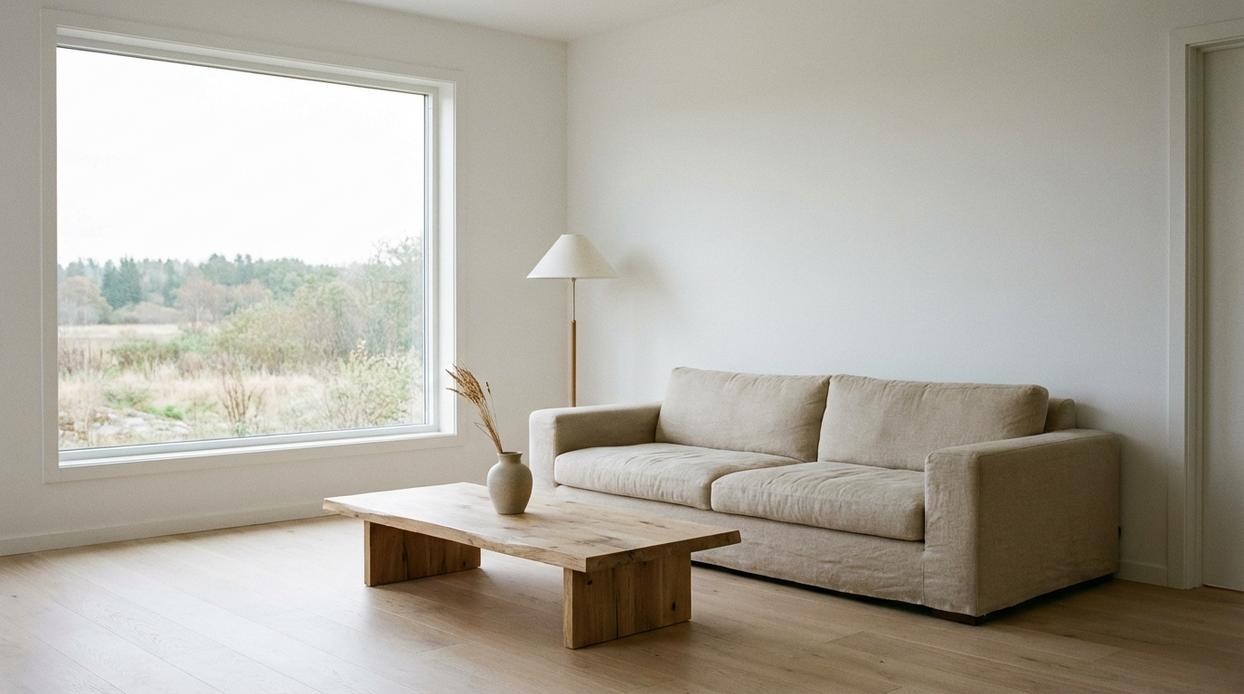
Creating a streamlined home isn’t about owning less—it’s about choosing better. Research from the National Association of Home Builders shows that storage and flexible layouts consistently rank among buyers’ top preferences, proving that function matters as much as form.
Prioritize Multi-Functional Pieces
A storage ottoman that doubles as a coffee table or a bed with built-in drawers reduces clutter while maximizing square footage. In small apartments, these dual-purpose items can eliminate the need for extra furniture entirely (which means fewer things to bump into at 2 a.m.). For more inspiration, explore multi functional home ideas for changing family needs.
Give Furniture Breathing Room
Design studies show that visual flow impacts perceived space. Pulling sofas a few inches off the wall creates depth, making rooms feel larger without adding a single square foot.
Choose Furniture with Legs
Pieces raised off the floor allow light to travel underneath, enhancing openness. This principle is often used in minimalist home concepts to maintain visual clarity.
Define Zones with Rugs
Open-concept homes benefit from rugs that establish clear areas for living and dining. Defined zones reduce cognitive clutter, helping spaces feel intentional rather than chaotic.
Decorate with Meaning, Not More Things
Go Big, Not Broad
When decorating, more isn’t always better. In fact, visual noise—a term designers use to describe clutter that competes for your attention—can make even a large room feel cramped. Instead of scattering small frames and trinkets everywhere, choose one oversized artwork or mirror. A single bold piece anchors the room and gives the eye a place to rest. Think of it like a movie lead versus a crowded cast of extras (not every object needs a speaking role).
That said, some argue that maximalist displays feel cozy and personal. And they can. However, without intention, they quickly become chaotic rather than curated. The key difference? Editing.
For example, group like items—candles, vases, or books—on a tray to form a vignette (a small, styled arrangement). This creates purpose instead of randomness. Similarly, incorporating natural elements such as one large plant adds texture and warmth without overwhelming the space. Studies show indoor plants can improve mood and perceived air quality (NASA Clean Air Study, 1989).
Pro tip: rotate décor seasonally. You don’t need everything out at once.
Ultimately, minimalist home concepts aren’t about having less for the sake of less—they’re about making space for what truly matters.
Your home doesn’t need to look like a museum to feel peaceful. In fact, chasing picture-perfect minimalism often creates more stress than serenity. The real goal is intention. A calm space is a chosen space. That might include bold art, family photos, or cozy throws—if they serve you.
Try this instead of a total overhaul:
- Clear one surface.
- Remove what you don’t use.
- Return only what adds function or joy.
This is where minimalist home concepts actually help—not by stripping personality, but by spotlighting it. Start small today. Momentum beats motivation every time. Peace builds from deliberate daily decisions consistently.
Bring Your Space to Life with Purpose
You started this journey looking for clarity, inspiration, and practical ways to create a home that feels intentional and beautifully balanced. Now you have the insight to apply minimalist home concepts, refine your layout, and make design choices that truly support your lifestyle.
A cluttered, uninspired space can drain your energy and limit how you live each day. The right design strategy transforms that frustration into flow, function, and visual harmony. When every element has purpose, your home starts working for you—not against you.
Now it’s time to act. Reassess one room, remove what no longer serves you, and implement one smart layout or decor upgrade today. If you’re ready for expert-backed ideas trusted by design-conscious homeowners, explore more space optimization strategies and start transforming your home with confidence. Your ideal space isn’t far away—take the next step and create it.
 Kelrisa Talvess founded Tht Homedec with a mission to bridge the gap between high-level interior design strategies and practical, everyday living. By blending sophisticated TH decor aesthetics with innovative space optimization tips, she has created a platform that empowers individuals to master their own home concepts. Kelrisa’s approach centers on the belief that creative insights should be both inspiring and functional, ensuring that every curated environment is as efficient as it is beautiful.