If you’re searching for inspiring home focal point ideas, you’re likely looking for practical ways to transform a room from ordinary to unforgettable. A well-designed focal point anchors your space, draws the eye, and sets the tone for your entire interior — but choosing the right one can feel overwhelming without clear guidance.
This article is designed to simplify that process. We’ll explore strategic, design-forward approaches to creating standout features in living rooms, bedrooms, kitchens, and beyond — all while maintaining balance, harmony, and functionality. Whether you’re working with a small apartment or a spacious home, you’ll find ideas that are both visually striking and realistically achievable.
Our insights are grounded in proven interior design principles, space optimization strategies, and trend-aware styling techniques. By the end, you’ll understand not just what works, but why it works — giving you the confidence to create a focal point that elevates your entire home.
Give Your Room a Purpose: The Power of a Focal Point
In addition to selecting the right furniture and artwork, incorporating the perfect houseplants can enhance your chosen focal point, so be sure to check out our article on ‘Which Houseplants Should I Buy Ththomedec‘ for some inspiring ideas.
A focal point is the visual entry point of a room—the first place your eyes land. Without one, spaces feel chaotic, uninviting, or simply off. So start by choosing a single star: a fireplace, oversized artwork, or a bold accent wall. If architecture exists, highlight it with lighting or contrast paint. If it doesn’t, create one with a statement sofa or gallery wall.
You might think every wall deserves attention; however, restraint creates impact (yes, less really is more). Explore home focal point ideas and commit to one centerpiece.
Start with the Bones: Highlighting Architectural Features
Before you buy another throw pillow, pause. The smartest design move is to work with what already exists. I always recommend starting with the “bones” of your home because BUILT-IN features create instant character (and save you money on unnecessary décor).
Fireplaces: Make It the Star
If you have a fireplace, let it lead the room. Arrange seating to face it directly—symmetry creates calm and signals importance. Style the mantel by layering:
- A large mirror or art piece as an anchor
- Medium objects like vases or candlesticks
- Smaller personal accents for depth
If the surround feels dated, update the tile or paint the mantel in a contrasting tone. This is one of the most reliable home focal point ideas because it draws attention naturally—humans are wired to gather around fire (thank you, evolution).
Large Windows: Frame, Don’t Hide
Choose light, airy window treatments that enhance the view rather than block it. Mount curtains high and wide to emphasize height. Place a minimalist chair or bench nearby to subtly pull the eye outward. LESS CLUTTER, MORE VIEW.
Unique Features: Turn Up the Volume
For built-in bookshelves, exposed brick, or a grand staircase, use:
- Accent lighting to create drama
- Strategic paint to define contrast
- Intentional décor that complements, not competes
Pro tip: If a feature feels “awkward,” highlight it instead of disguising it. Design confidence is often the difference between dated and distinctive.
Make a Statement: Using Art and Accent Walls
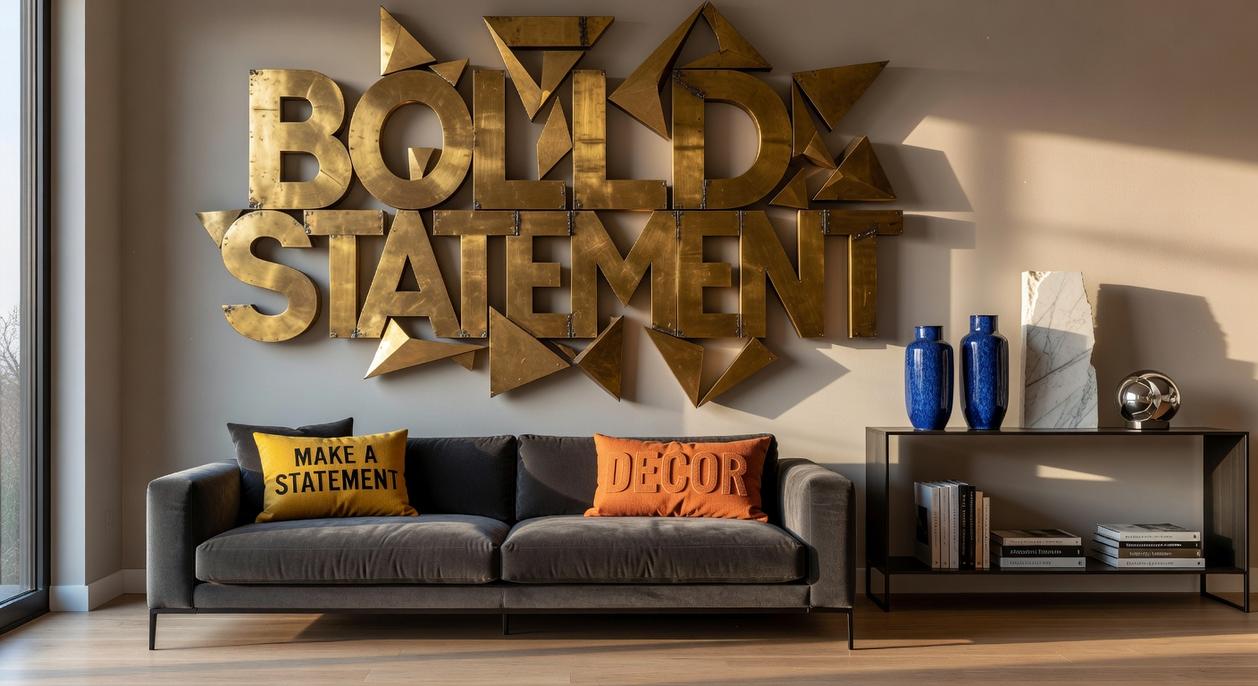
The Art of Impact
First and foremost, a single oversized artwork can instantly anchor a room. Designers often recommend that wall art span two-thirds to three-quarters of the furniture width beneath it for balanced proportion. For example, a 90-inch sofa pairs well with art around 60 inches wide. This scale creates a deliberate focal point rather than a floating afterthought. Some argue that large pieces feel risky or overwhelming. However, when the scale is correct, the result feels intentional—like a movie poster framed perfectly on opening night (main character energy, but for your wall).
Gallery Walls
On the other hand, a curated gallery wall offers movement and personality. Consistent frame finishes—such as all black metal or natural oak—create cohesion, while a unified theme (travel photography, abstract sketches, family portraits) keeps it from looking chaotic. Layout matters: start with the center piece at eye level (about 57–60 inches from the floor), then build outward. While critics say gallery walls can feel cluttered, thoughtful spacing—2 to 3 inches between frames—keeps them refined.
Accent Walls Reimagined
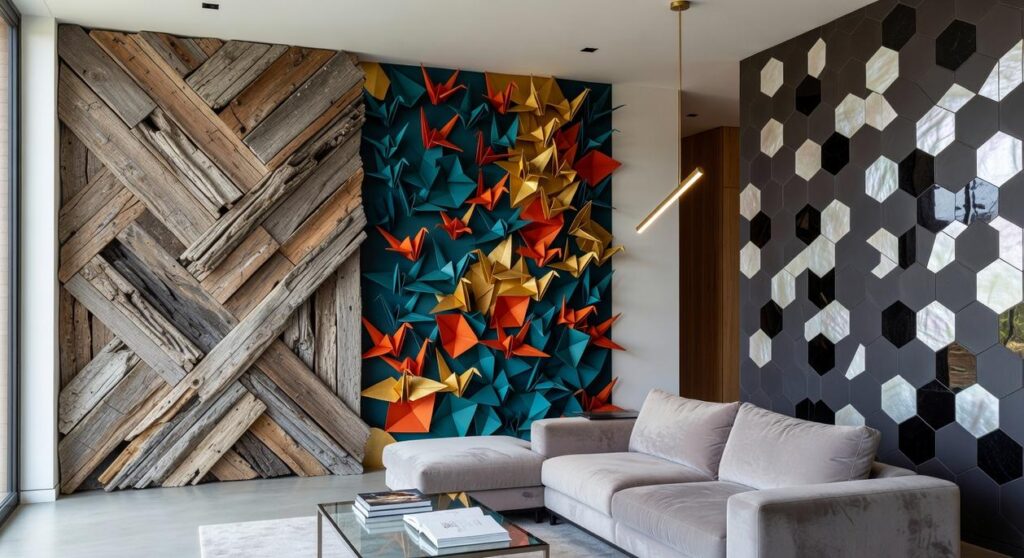
Meanwhile, accent walls have evolved beyond paint. Textured grasscloth wallpaper adds dimension, vertical wood slats introduce architectural rhythm, and deep charcoal or forest green creates depth that visually enlarges a space. These materials don’t just look good—they absorb or reflect light differently, amplifying impact (especially when paired with lighting highlights how to use layered lighting for visual impact).
Mirrors as Centerpieces
Finally, mirrors double as art and function. A large arched mirror reflects natural light, making rooms feel up to 30% brighter according to interior lighting studies. For those exploring home focal point ideas, mirrors offer style and spatial expansion in one elegant move.
Function Meets Form: Furniture and Lighting as Focal Points
I once dragged a bright teal velvet sofa into an otherwise beige living room and immediately panicked. It felt loud. Over-the-top. But within a week, every guest gravitated toward it. That’s when I understood the power of a Hero Piece—a significant item that visually anchors a room. Whether it’s a canopy bed or a rustic dining table, one bold choice can organize everything else around it (and save you from endless accessorizing).
Some argue focal points should be subtle. I disagree. A room without contrast can feel like elevator music—pleasant, but forgettable.
Strategic Groupings
A focal point doesn’t have to be oversized. A reading nook—distinctive armchair, slim side table, warm lamp—can command attention through intention. Grouping creates gravity. Think of it like the “Friends” couch at Central Perk: not flashy, just perfectly staged.
Lighting that Dazzles
A sculptural pendant or dramatic floor lamp draws the eye upward, adding height and drama. Studies show layered lighting improves perceived comfort in interiors (American Lighting Association). A statement fixture over a dining table? Instant atmosphere.
Rugs as the Foundation
A bold patterned rug defines territory in open spaces. It’s the visual cue that says, “This is the conversation zone.”
| Element | Impact | Best Use |
|---|---|---|
| Sofa | Anchors layout |
Living rooms |
| Pendant Light | Adds drama | Dining areas |
| Patterned Rug | Defines space | Open plans |
Pro tip: Start with one daring choice from your list of home focal point ideas and let everything else support it.
Your Blueprint for a Beautifully Centered Space
A room without direction feels unfinished. You can have the right sofa dimensions, balanced lighting (measured in lumens), and a cohesive color palette, yet something still feels off. That missing piece is a focal point—the visual anchor that immediately draws the eye and organizes the space around it.
The solution is simpler than most people think. Either enhance what already exists—like a fireplace, oversized window, or built-in shelving—or create a new centerpiece using intentional design choices. Strategic placement and contrast are key features that transform ordinary elements into statement-makers.
Here are practical home focal point ideas you can apply immediately:
- Statement Art: A large-scale canvas (at least two-thirds the width of your sofa) creates instant hierarchy.
- Accent Wall: A bold paint color or textured wallpaper adds depth and dimension.
- Hero Furniture Piece: A sculptural chair or dramatic headboard commands attention.
- Lighting Feature: A chandelier with 2,000–4,000 lumens brightens and defines dining areas.
Choose one room. Pick one strategy from this list. Implement it this week.
Creating a focal point is a small, high-impact shift. It clarifies purpose, improves flow, and gives you confident control over how your home looks—and more importantly, how it feels.
Bring Your Space Together with Purpose
You came here looking for clarity on how to design a room that feels balanced, intentional, and visually striking. Now you understand how home focal point ideas can completely transform the flow, mood, and functionality of your space.
An unfocused room feels cluttered, awkward, and incomplete — and that frustration adds up every time you walk in. The right focal point eliminates that confusion. It anchors your design, maximizes your layout, and turns ordinary rooms into spaces that feel styled and cohesive.
The next step is simple: choose one room, identify its strongest architectural or decorative feature, and build around it with confidence. Start small, stay intentional, and refine as you go.
If you’re ready to stop second‑guessing your design choices and finally create a space that feels polished and purposeful, explore more expert-backed home focal point ideas and practical styling strategies today. Your home deserves to feel finished — start designing with intention now.
 Constancel Gonzalezambadova brings a refined eye for detail to the team, focusing on the nuanced application of interior design strategies. Her work is dedicated to translating complex home concepts into actionable steps, ensuring that every design element aligns with a cohesive aesthetic. By prioritizing the intersection of style and utility, she helps bridge the gap between creative vision and the everyday functionality of a living space.